Robotic Esophagectomy: Techniques and Outcomes
Speaker
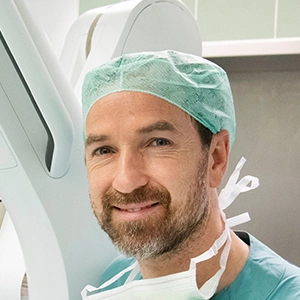 | Peter GRIMMINGER Senior Consultant and Head Upper GI-surgery, Department of General-, Visceral- and Transplantation Surgery University Medical Center Mainz, Germany |
Talk Abstract
Currently we have several different surgical techniques which are performed for transthoracic esophagectomy. The most frequent technique was open surgery, however, since several years a partially minimally-invasive approach (hybrid procedure) has overtook the open approaches. In high-volume centers, the standard approaches however are total minimally-invasive or robotic-assisted approaches.
The international trend is also moving towards laparoscopic and thoracoscopic or mediastinoscopic approaches, since the randomized controlled studies also prove some benefit for the patients by reducing the invasiveness due to minimally invasive access. In addition, the standardization of the newer robotic-assisted techniques and possibilities and precision lead to a more radical and at the same time more preserving technique. Also in internal analysis of our high volume center we were able to validate the RCTs and showed that RAMIE techniques were associated with a lower overall pulmonary and cardiac complication rate as well as a shorter hospital stay compared to open or hybrid approach (OE, HE). RAMIE also resulted in higher lymph node harvest than MIE. Further trends in robotic techniques will be shown during the talk, as well as different single port da Vinci (daVinci SP) approaches for esophageal resection.